
Washing Machine Not Draining
Washing machine not draining? Generally, this kind of trouble ranks among the most frequent issues with these devices. This symptom triggers more service calls than any other home appliance service request, representing nearly 50% of technician visits.
It manifests in various ways, such as pausing right before the spin cycle, leaving water trapped in the drum, or flashing an error code. In most cases, it comes down to a clogged filter or drain hose or a problem with the drain pump.
So, what causes it, how can you tell, and how fast can it be fixed?
Key Takeaways
- Washing machine not draining: symptoms and causes
- How this problem varies across different makes and brands
- Repair timelines for a technician and simple preventive maintenance steps
Washing Machine Not Draining: Red Flags
When your washer is not draining, there are several unmistakable symptoms that point to the problem. If you notice any of these signs, it is best to unplug the appliance and contact a trusted technician.
- Water remains in the drum after the cycle finishes.
- The appliance fails to advance to the spin cycle.
- The program stalls during the drain stage.
- An error code appears on the display screen.
- The drain cycle takes an unusually long time to complete.
- The appliance hums during the drain phase, yet water remains in the tub.
- Laundry comes out excessively wet after the cycle finishes.
What Causes the Problem
The Drain Hose Is Kinked or Clogged
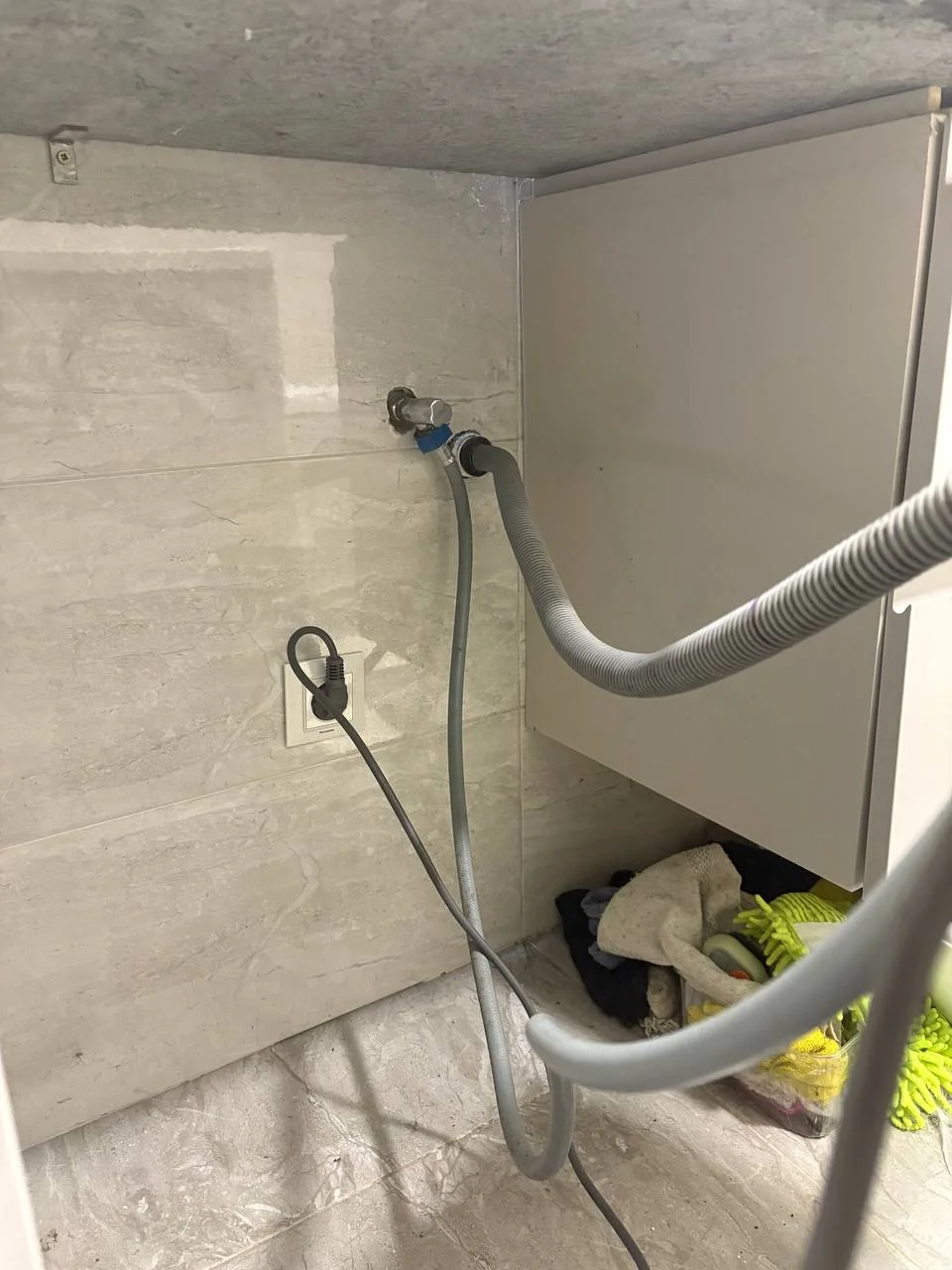
If the washing machine drain hose clogged, the cause may be something as simple as moving the washer and accidentally pinching the hose. Lint, dirt, and other debris can build up inside and eventually create a blockage that stops the pump from moving water out. The good news is that this is often one of the easier problems to fix — the hose can be removed, flushed, and cleared without replacing any parts.
The Home Drain or Standpipe Is Blocked
If your washer not draining and there is no clog in the drain hose, it is reasonable to suspect that the drain pipe connected to your home’s plumbing is blocked. The water simply has nowhere to go, so it flows back into the drum, while the washing machine itself may be working perfectly fine. Once diagnostics point to the house line, call a professional plumber to clear the waste pipes right away. A key sign is slow drainage in other fixtures connected to the same line.
A Foreign Object Is Blocking the Drain Filter or Drain Path
Sometimes water fails to drain due to a foreign object trapped in the drain filter or further along the drain path. Common items include coins, buttons, small garment accessories, hairpins, and other pocket debris. These objects disrupt proper water flow and can physically jam the drain pump. Resolving this requires a full inspection of the filter, drain line, and pump housing to locate and clear the blockage.
The Drain Pump Has Failed
Even a reliable washing machine can eventually experience drain pump failure. Over time, the pump’s bushings may wear down, its electrical winding may burn out, or the plastic impeller blades may break. You may hear a low hum when the washer tries to drain, or it may stay completely silent with water still in the tub. Once the pump is worn out, replacing it is the solution.
There Is an Issue With the Water-Level Sensor, Door/Lid Lock, Wiring, or Control Board
Sometimes the cause of a drainage problem has nothing to do with a clog or the pump and is actually somewhere in the electronics. A faulty water-level sensor, door lock, damaged wiring, or control board can disrupt the normal operation of the cycle. As a result, the washer may misread the water level or prevent the cycle from moving on to the drain stage. As a result, the machine may incorrectly determine the water level or fail to let the cycle move on to draining. A glitch in these components falls into the category of complex system faults. Because these electronic components represent complex system faults, scheduling a comprehensive professional diagnostic is the best approach.
Another Cycle-Related Fault Is Preventing the Washer From Draining
When the electronic control module experiences a software lag or cycle logic error, the signal to initiate the drain phase fails to process. All hardware components — including the pump, filter, and hose — remain fully functional. This can happen after a sudden power surge or when the laundry becomes unbalanced in the drum. In many cases, unplugging the washer to reset the system or manually starting the Drain/Spin cycle resolves the issue. If it doesn’t, professional diagnostics may be necessary.
Which Washing Machines Are Most Likely to Have This Problem
If your washing machine won’t drain, it is easy to assume the manufacturer or a specific model choice is at fault. However, neither the brand nor the model is usually the primary factor behind this matter.
Such a headache can show up either in a brand-new item just a few months into use due to a clog, or suddenly disappoint you after a decade of operation from worn-out parts. So the brand itself does not mean the pump will definitely break down early or last an unbelievably long time — a lot depends on operating conditions. It is best to read the manufacturer’s advice on preparing laundry before washing and on selecting cycles.
Drain Pump Reliability: Does It Depend on the Brand?
Dealing with a washing machine not draining because of a worn-out pump is a common bump in the road, leaving many to wonder which brand offers the best longevity. Keep in mind that appliance brands do not manufacture the pumps themselves. They source them from third-party manufacturers, and different models can use different types of pumps. A washer’s age alone does not determine how long the drain pump will last as well — usage, cycle count, and operating conditions matter too.
How to Prevent It
When a washer won’t drain, it stops the whole household routine. However, practicing proper maintenance can greatly reduce the likelihood of these issues occurring.
- Inspect and clear the drain filter every few months
- Empty all garment pockets prior to washing
- Avoid overloading the machine beyond its recommended capacity
- Inspect the drain hose periodically
What You Need to Know About Drain System Repair
You may be asking yourself, why is my washing machine not draining, and how quickly can it be resolved? When an experienced technician provides assistance, the problem is typically resolved the same day. A reliable Washer Repair will offer service at your home, usually within one to two hours, including diagnosis.
As you can see, a drainage problem can be a serious inconvenience, but it is usually correctable in a short time. Contacting professional technicians promptly ensures the root cause is accurately diagnosed and corrected without delay.
FAQ
Why is my washing machine not draining?
Common causes include a clogged filter or drain hose, a foreign object blocking the drain path, or a malfunctioning drain pump.
What should I do if my washer won’t drain?
Unplug the washer, inspect and clean the filter, remove any blockage, and contact a technician if the problem continues.
Can a clogged drain hose stop a washing machine from draining?
Yes, a blockage or severe bend in the drain hose restricts flow capacity and can lead to a complete halt of the drain cycle.
How do I know if the washing machine drain pump is failing?
If the drain pump makes a loud noise, hums, or shows no signs of life at all, while the filter is clean, it is time to replace it.
Why is there still water in my washer after the cycle ends?
Standing water in the drum can indicate a drainage problem or an issue with the spin cycle.
Is it safe to run a washing machine that is not draining?
If your washer is not draining, stop the cycle, unplug the appliance, and check the drainage system. If you cannot identify the problem, contact a technician.